Why Intraday Execution Is Now an Automation Problem
Intraday power markets don't wait. The question is whether your trading desk can keep up.
Published
May 4, 2026
Intraday power markets don't wait. The question is whether your trading desk can keep up.
Published
May 4, 2026
Across Europe, intraday trading has become measurably harder. The transition to 15-minute contracts, faster gate closures, and rising renewable penetration have compressed the time window between a market signal and a profitable trade. Meanwhile, automated desks are capturing value that manual teams simply cannot reach — not because those traders are less skilled, but because some markets are moving faster than human reaction times allow.
This is not a future problem. It is already reshaping intraday P&L across European exchanges today.
Most trading desks understand the strategic case for automation. Fewer have a clear picture of exactly where the execution gap is hitting the bottom line.
The losses are quiet but consistent. When a trader monitors three markets manually and misses a favourable price spike in a fourth, the cost doesn't appear in any single trade — it accumulates in aggregate underperformance against market benchmarks. When overnight coverage is thin and open positions aren't closed optimally before gate closure, the imbalance cost lands on the balance sheet without a clear cause. When a volatile 15-minute window opens and closes before a manual order is placed, the opportunity is simply gone.
The benchmark to beat is often the ID3 index — the volume-weighted average of the last three hours of intraday trading before delivery. Consistently closing positions above or below that benchmark (depending on your position) is the standard measure of execution quality. For teams relying on manual processes, consistently outperforming this benchmark is structurally difficult at scale.
Automated intraday execution means deploying algorithmic strategies that monitor market conditions and execute orders without waiting for a trader to act. At its core, this is about closing your positions reliably and at better prices — not about removing your traders from the equation, but about ensuring they are focused on decisions that require human judgment rather than on repetitive order execution.
In practice, this means:
Reacting to price and liquidity signals at algorithmic speed. When a spread opens up or liquidity deepens at a favourable price level, an execution algorithm can act in milliseconds. Manual execution in the same window is slower by definition.
Maintaining consistency across all market hours. Algorithms execute with the same precision at 3 a.m. as at 10 a.m. Staffing a trading desk for 24/7 high-quality coverage is expensive; automation makes continuous coverage operationally viable.
Applying configurable execution logic to your own position context. Not all automated execution is the same. The most effective approaches allow trading teams to set parameters — including acceptable price levels, volume constraints, and timing rules — that reflect their specific position structure and risk appetite. This is where execution performance is actually built.
Logging every decision for full auditability. REMIT compliance requires that every trade and strategy can be traced, explained, and reported. Automated systems with built-in audit trails meet this requirement structurally — no manual reconciliation required.
The financial case for automated execution is measurable. Battle-proven execution algorithms generate improvements in position-closing performance in the range of 0.15–2 €/MWh, depending on market conditions, strategy configuration, and position complexity. For desks handling significant traded volumes, this improvement compounds meaningfully over time.
For asset-backed trading desks — utilities managing hydro, thermal, or renewable assets — the potential is larger. Automating flexibility trading across intraday markets can generate 1.5–5 €/MWh in additional revenue per MWh of flexible asset capacity actively traded.
These are not one-off gains. They are the result of consistent, disciplined execution applied systematically across every eligible trading window — the kind of consistency that manual operations struggle to sustain.
Not all automated execution platforms are equivalent. When evaluating options, trading teams should look for:
PowerBot, Volue's intraday algorithmic trading engine, is built around all of these requirements. It enables trading desks to run out-of-the-box execution algorithms or deploy their own custom strategies — at scale, across multiple European intraday markets, with full configurability and auditability.
The question for most intraday trading desks is no longer whether to automate execution — it is whether to do it now or fall further behind. Competitors operating automated desks are systematically capturing value in the same windows where manual teams are working harder to keep pace.
Scaling trading activity without growing headcount, maintaining 24/7 coverage without unsustainable staffing costs, and outperforming benchmarks consistently — these outcomes are achievable today. The technology is proven. The performance data exists. The regulatory framework supports it.
The relevant question is simpler: at the current pace of market development, how long can your desk afford to wait?
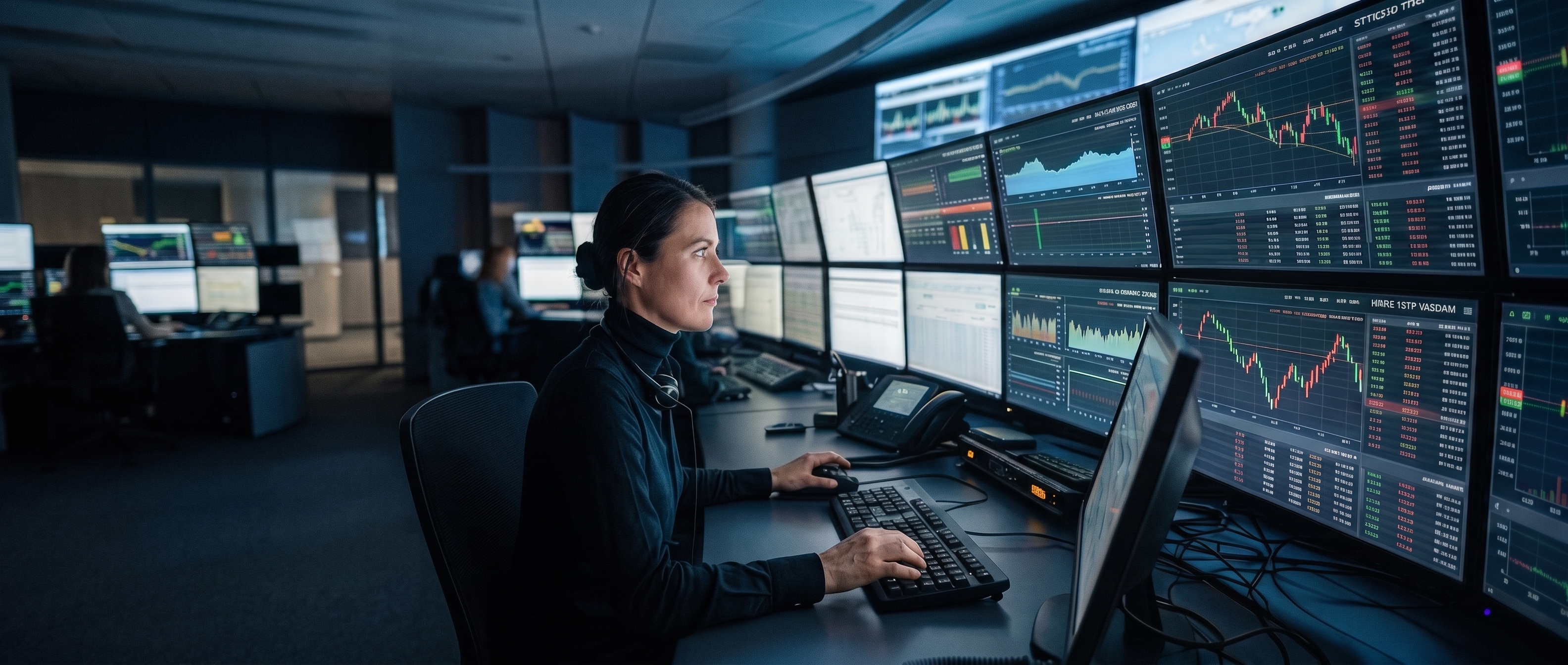
Unlock new profit potential and operational confidence with Volue Intraday Algo Trading (PowerBot), the automated trading solution built for your success in volatile power markets.
Energy Trading Software